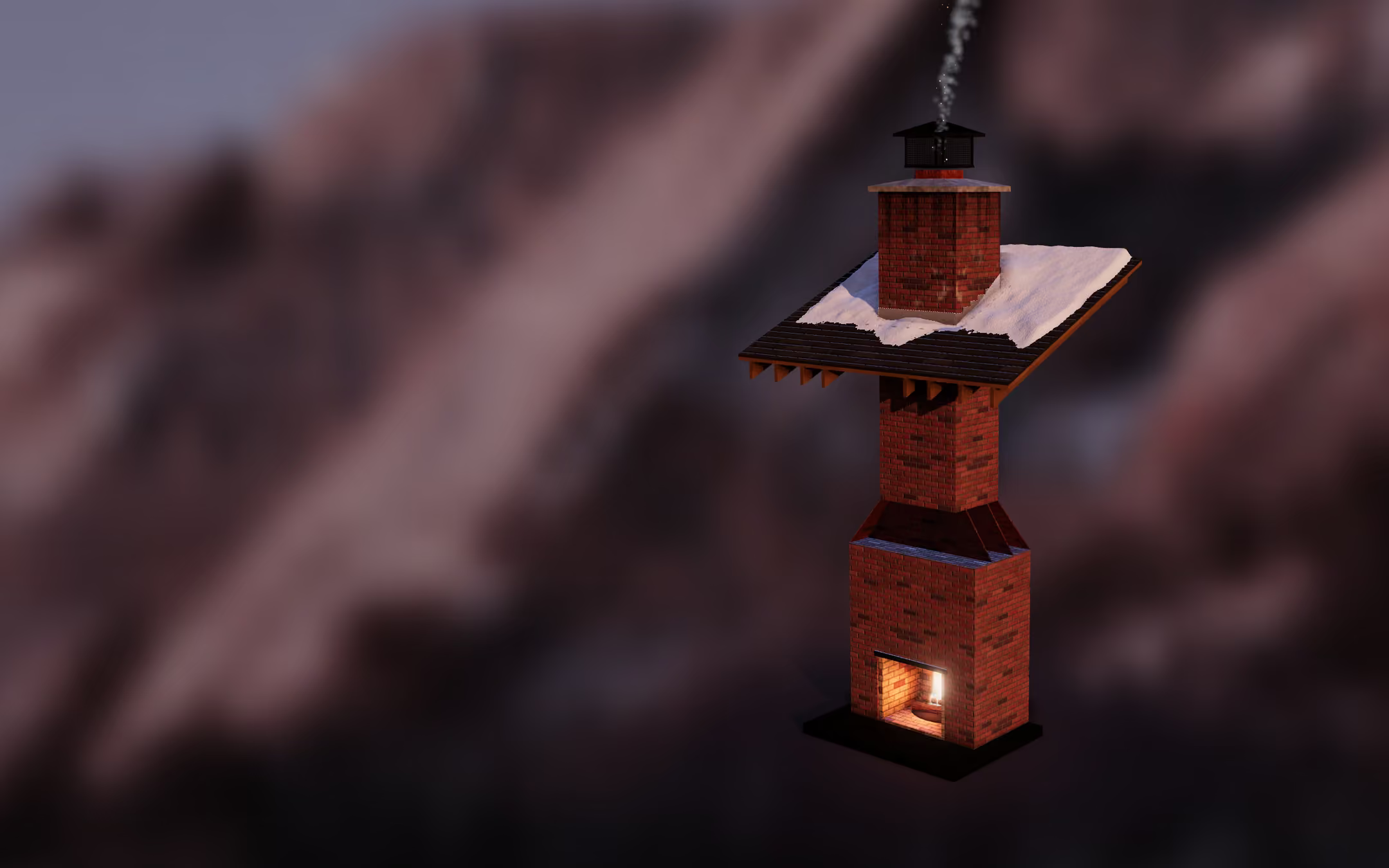
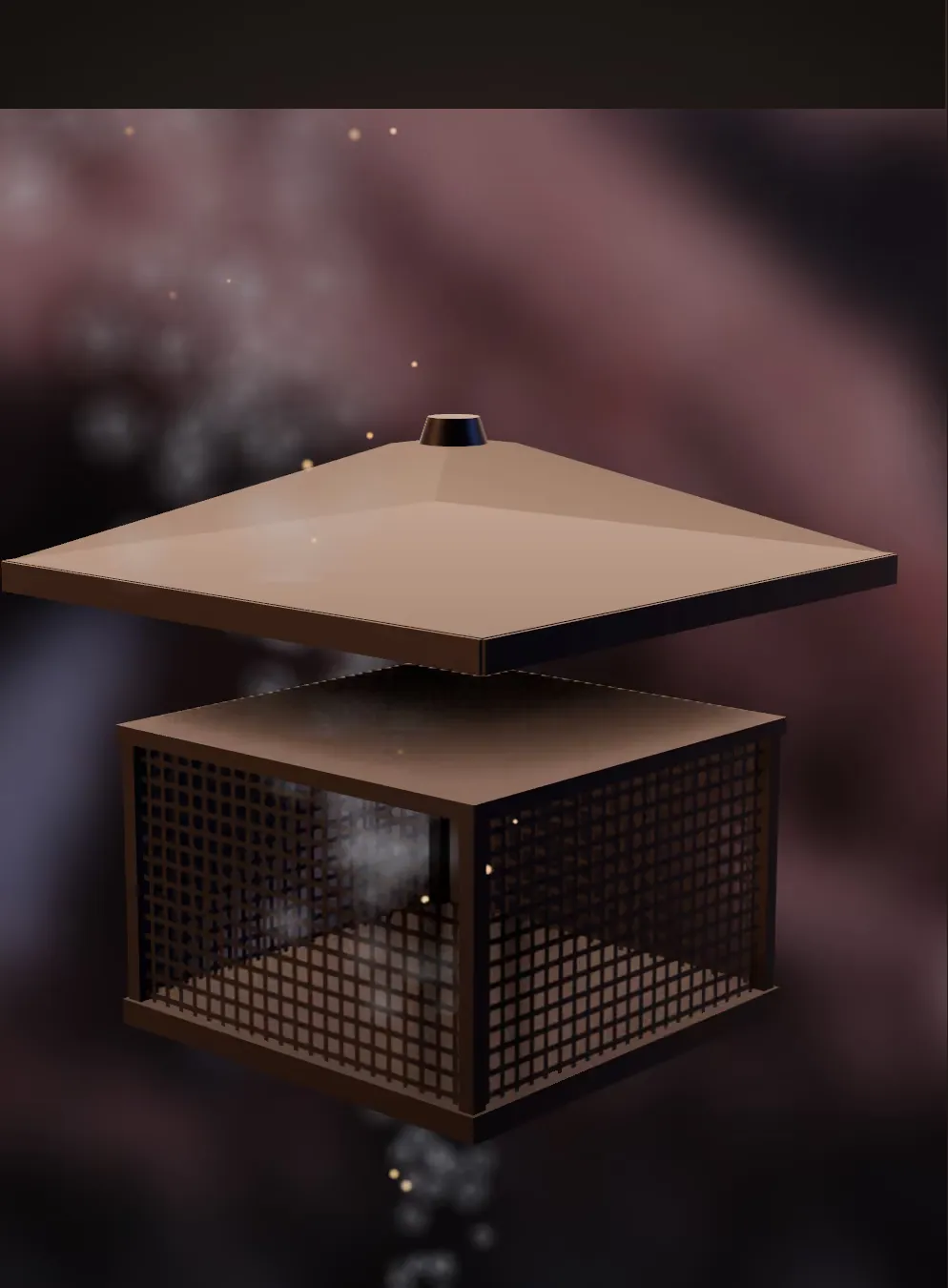
1Over the flue opening
Cap
The cap shuts out snow, rain, birds and squirrels, and its mesh stops embers before they can land on shingles or dry grass.
We check: fit, corrosion, torn mesh, nesting material.
Next: CrownOffice hours: Mon to Fri 7 AM to 7 PM, Sat 8 AM to 5 PM. Online booking any time.
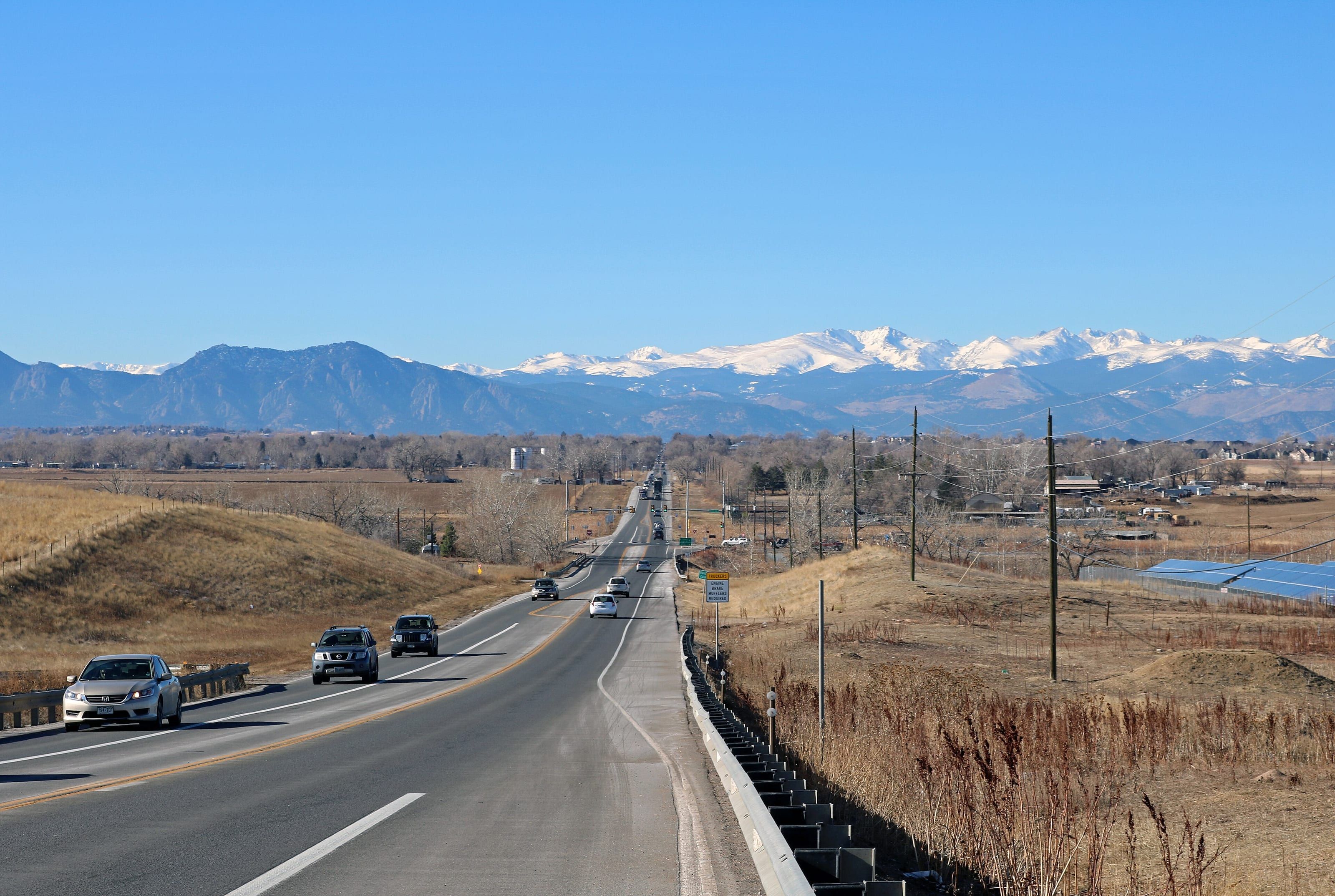
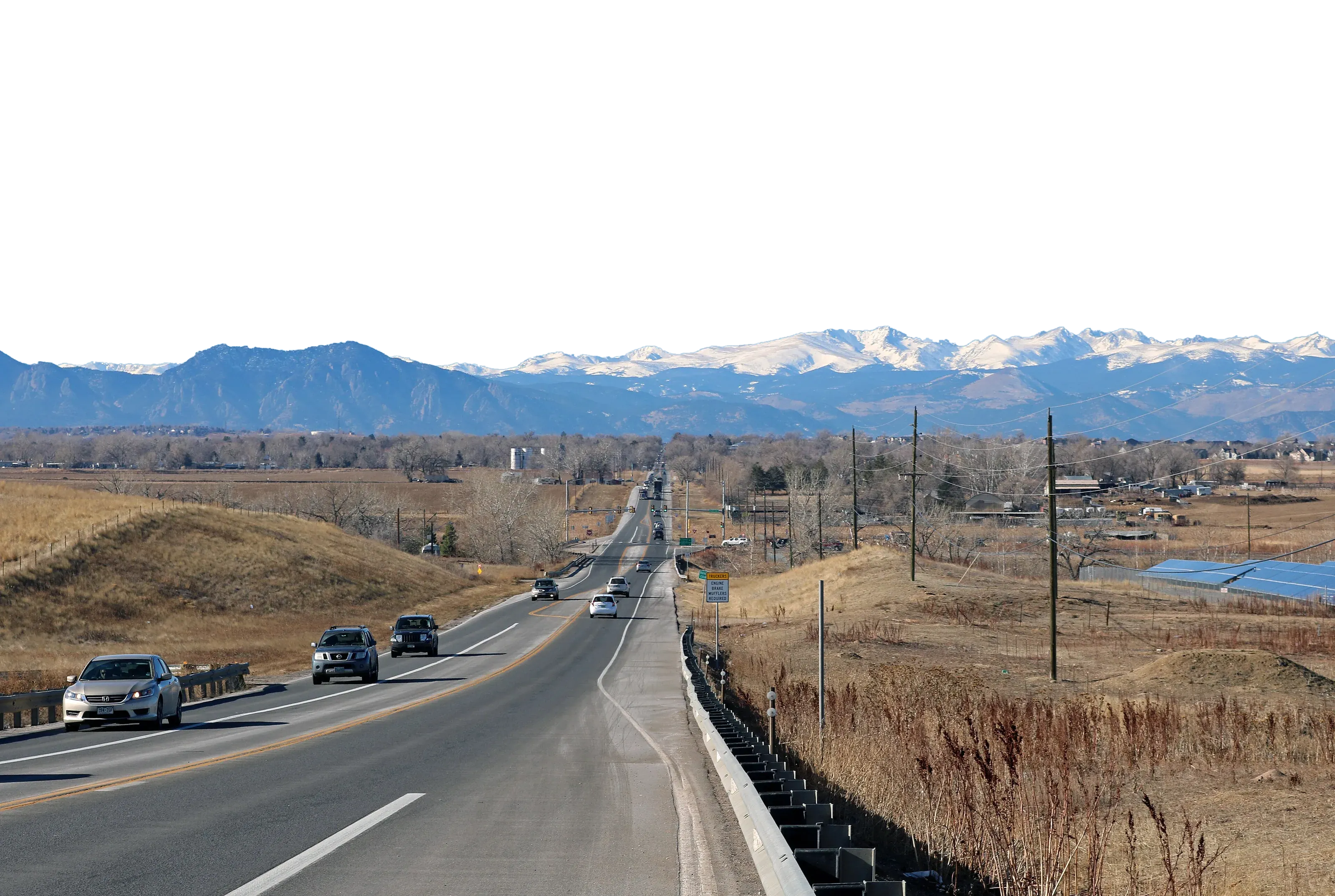
Sweeping, inspection and masonry repair across Lafayette, from the Old Town cottages to the streets around Indian Peaks.
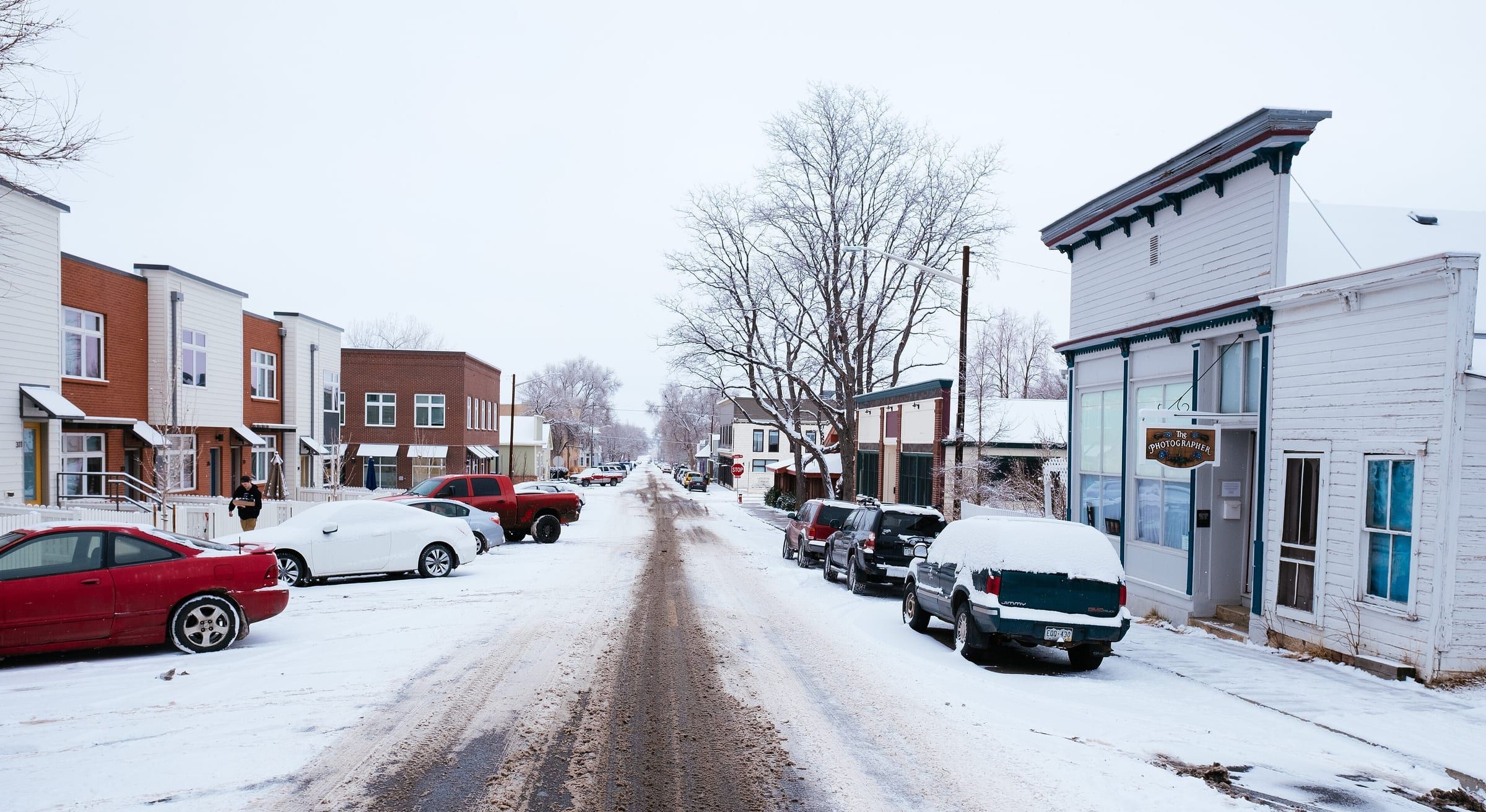
Photo: Jeffrey Beall, CC BY 4.0
Choose a part to see what we look at, and what a Lafayette winter does to it.
Start at the cap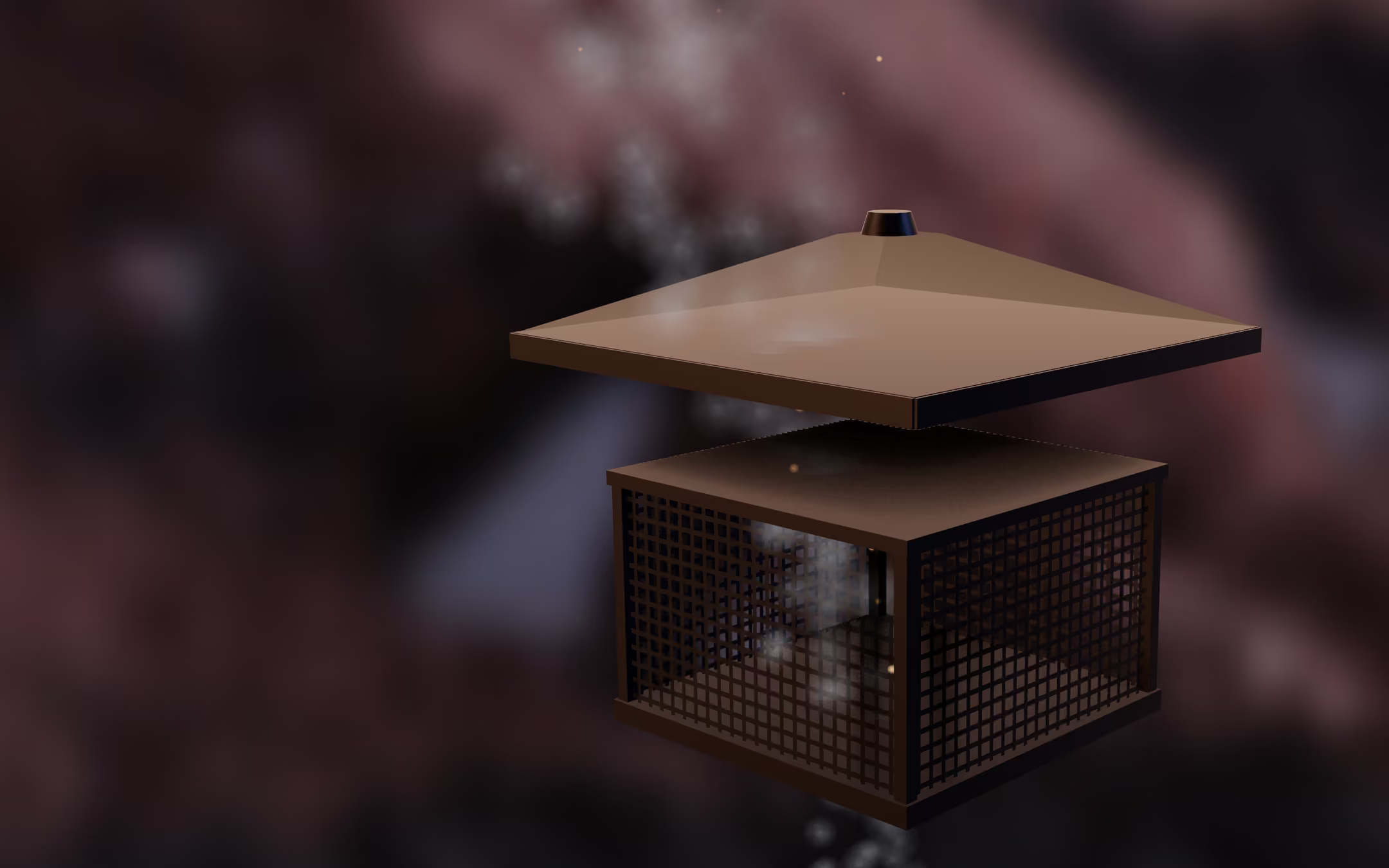
1Over the flue opening
The cap shuts out snow, rain, birds and squirrels, and its mesh stops embers before they can land on shingles or dry grass.
We check: fit, corrosion, torn mesh, nesting material.
Next: Crown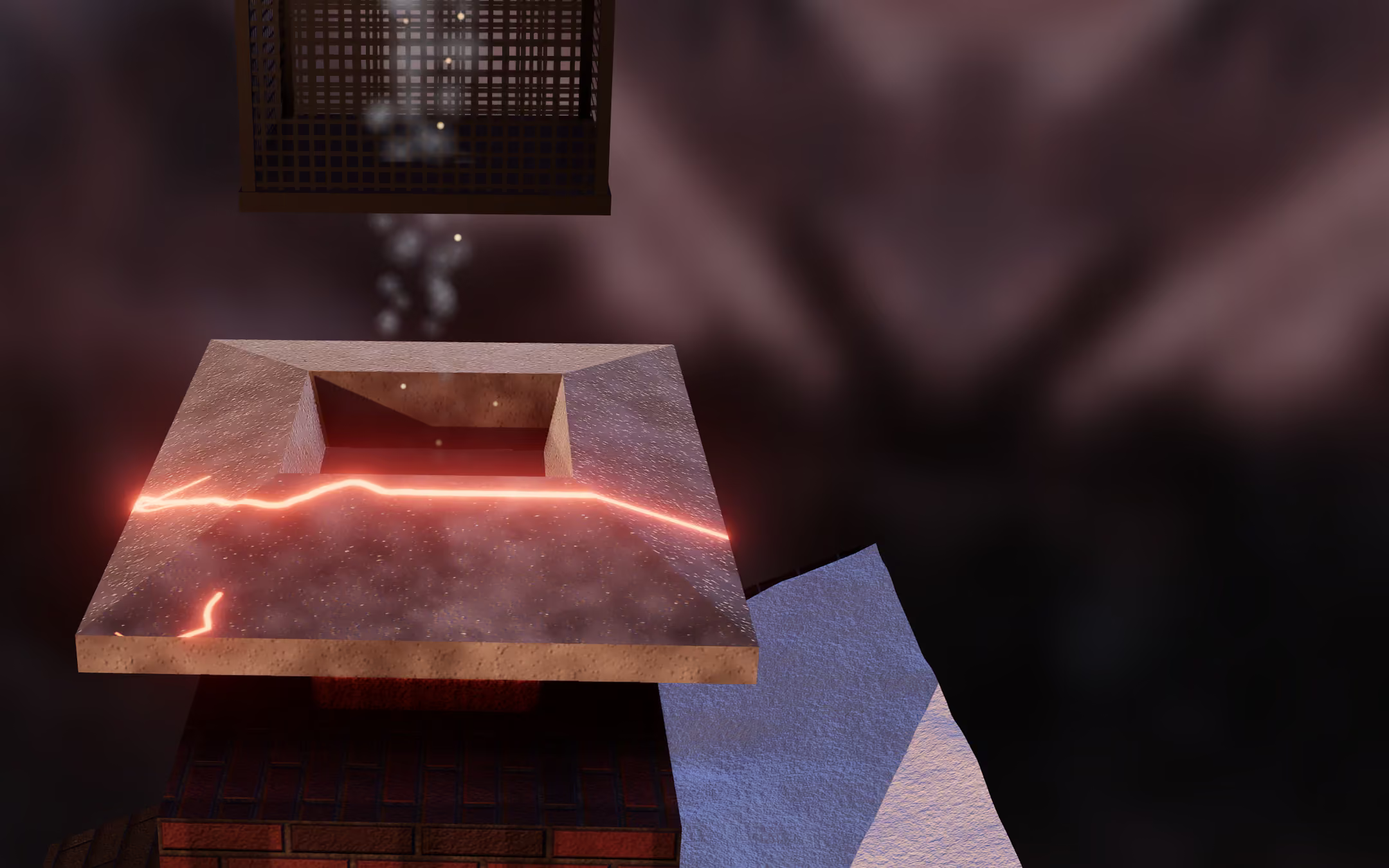
2The concrete slab
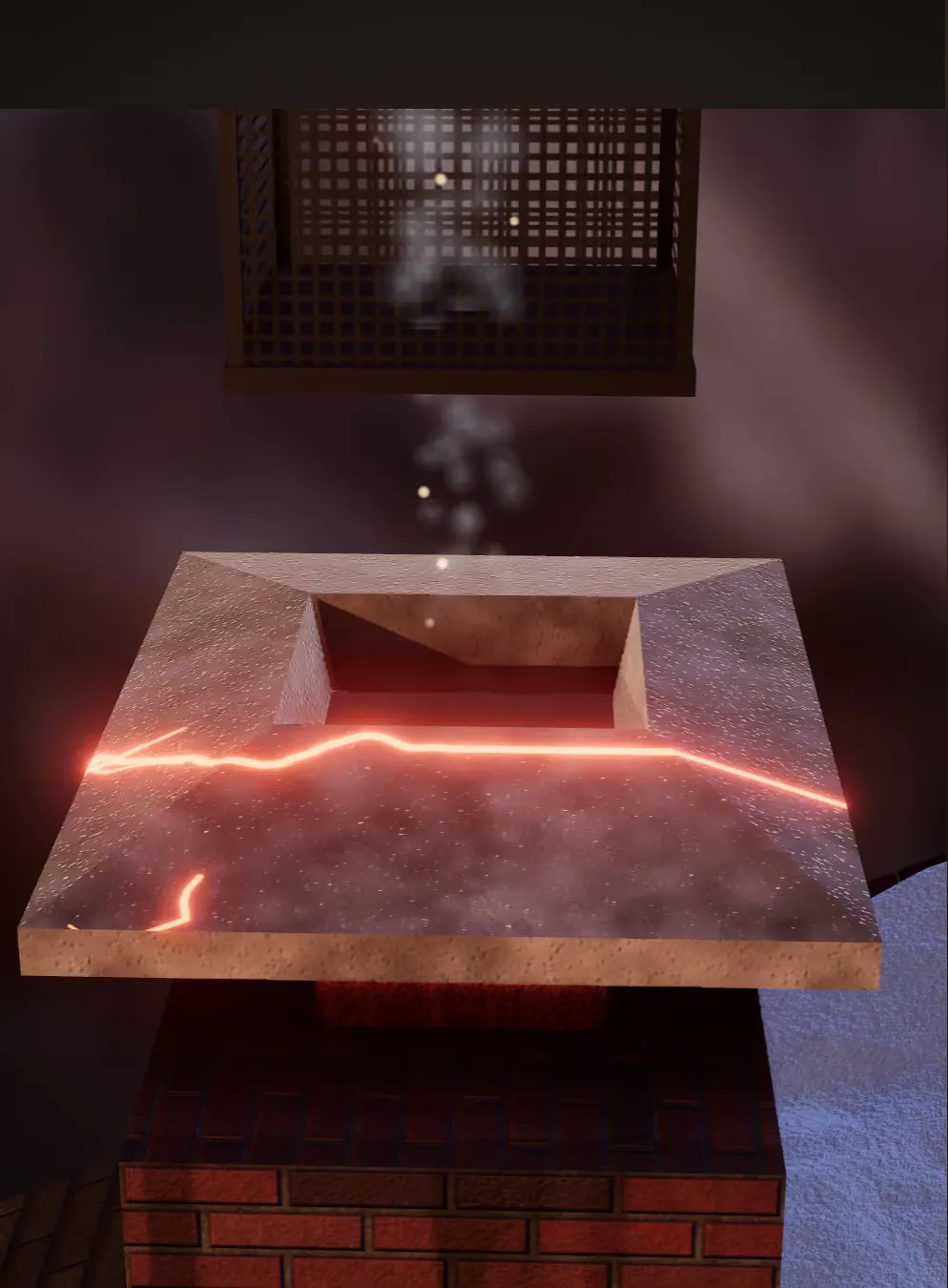
Water that works into a hairline crack in the crown swells by about 9% as it freezes, and a Lafayette winter repeats that night after night.
We check: hairline cracks, flaking, gaps around the flue tile.
Next: Flashing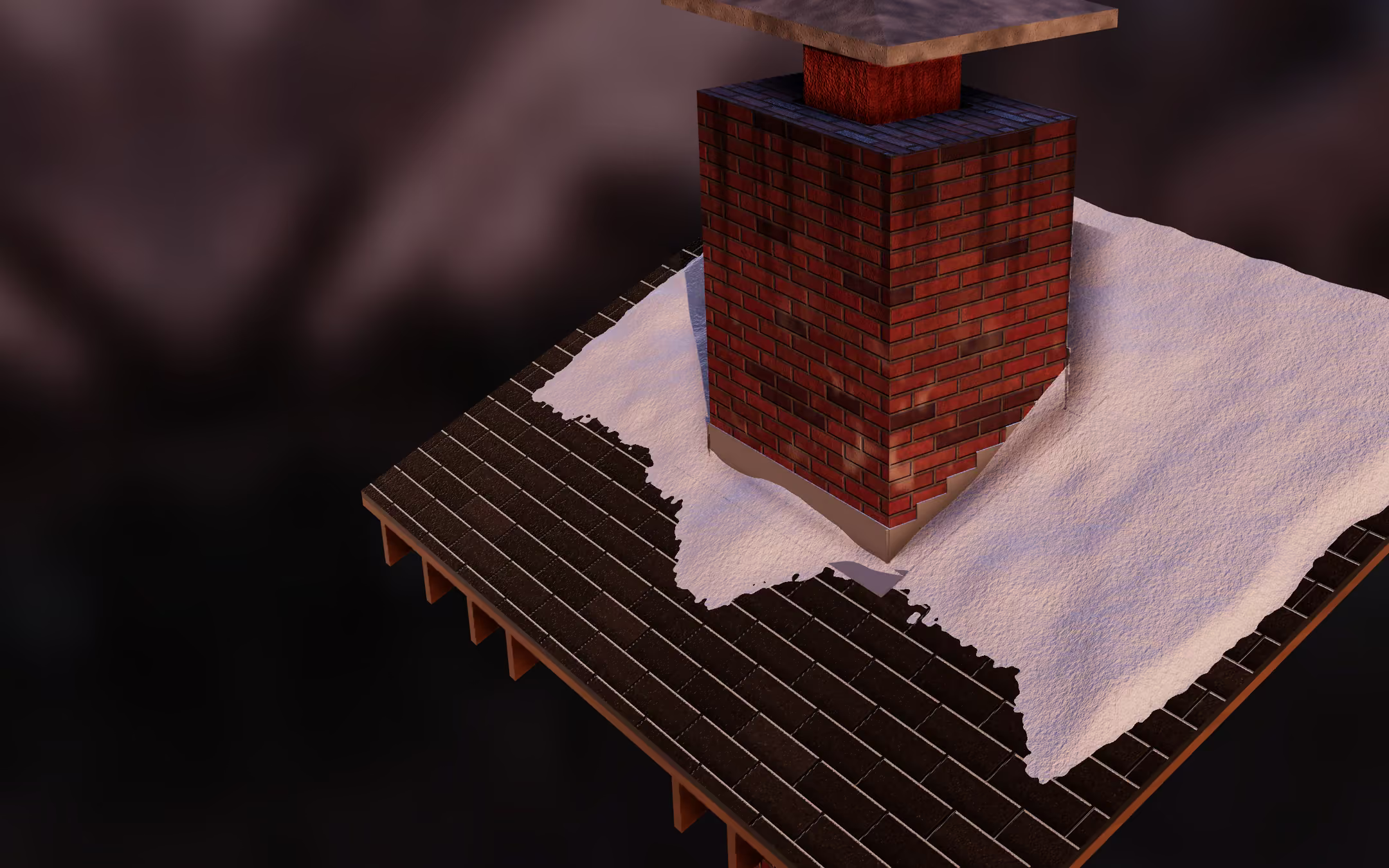
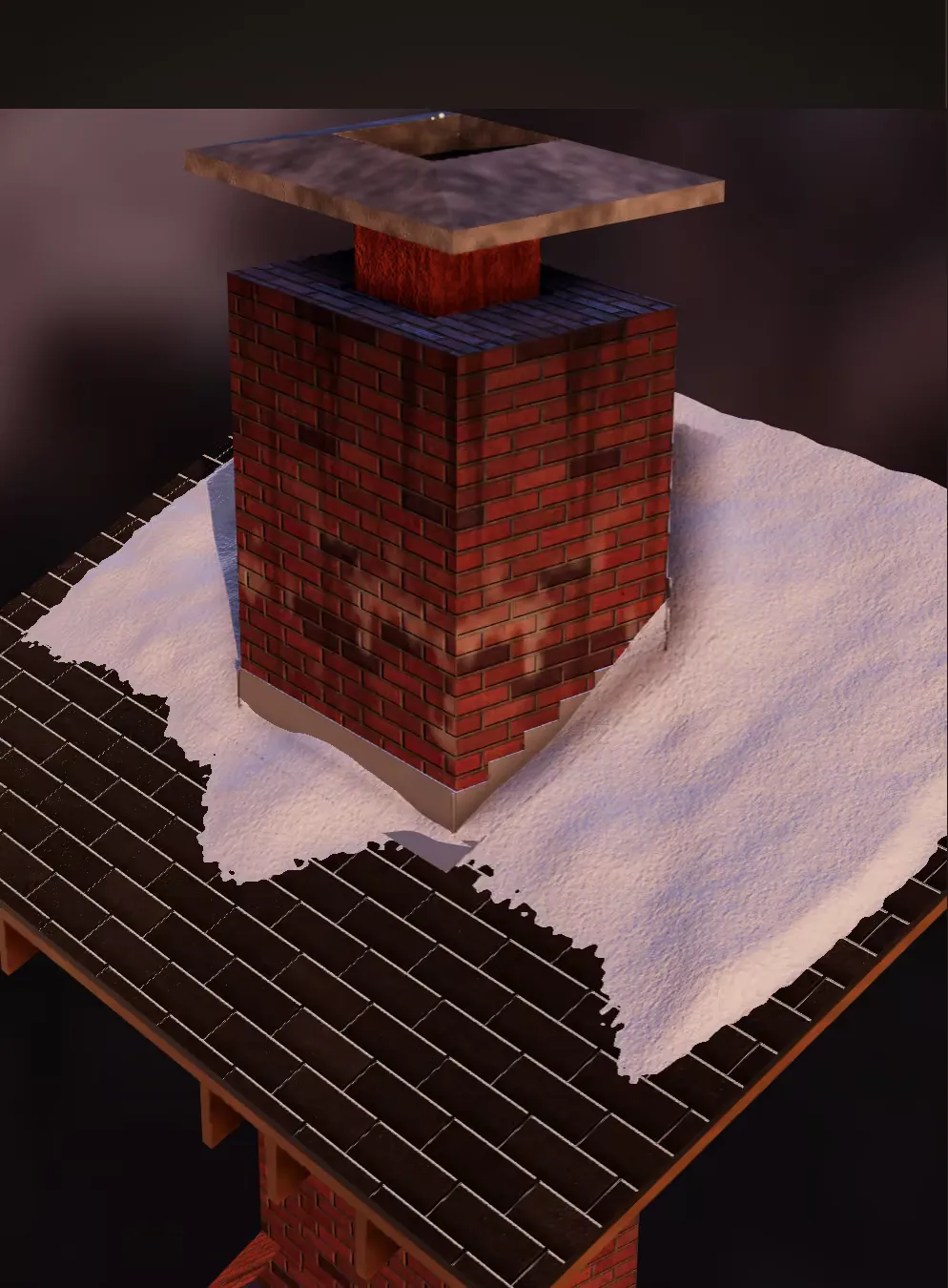
3Where chimney meets roof
The metal and sealant where chimney meets roof. Snow banks against it and melts slowly, so one lifted edge is enough to let water in.
We check: lifted counterflashing, dried sealant, stains in the attic.
Next: Flue liner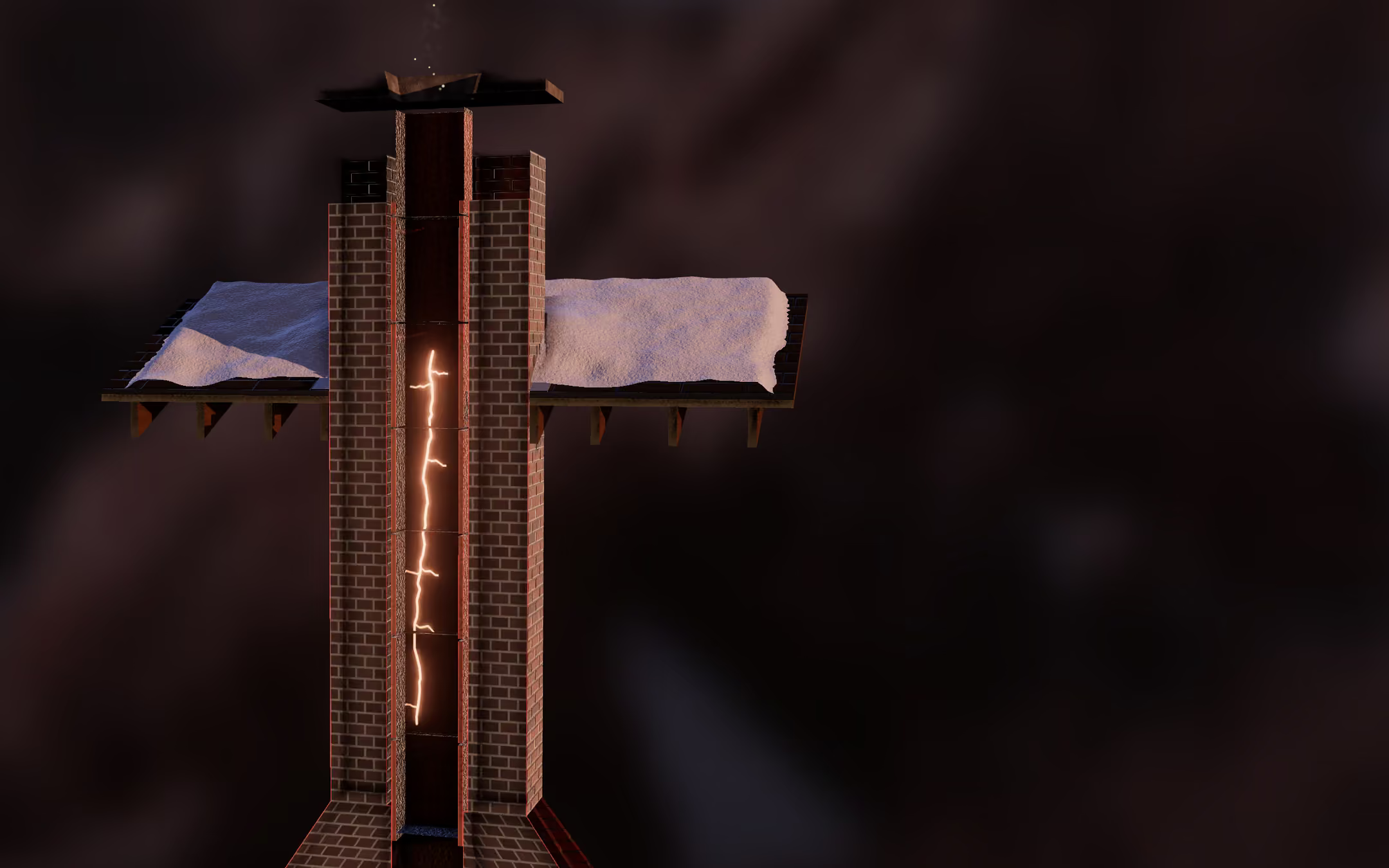
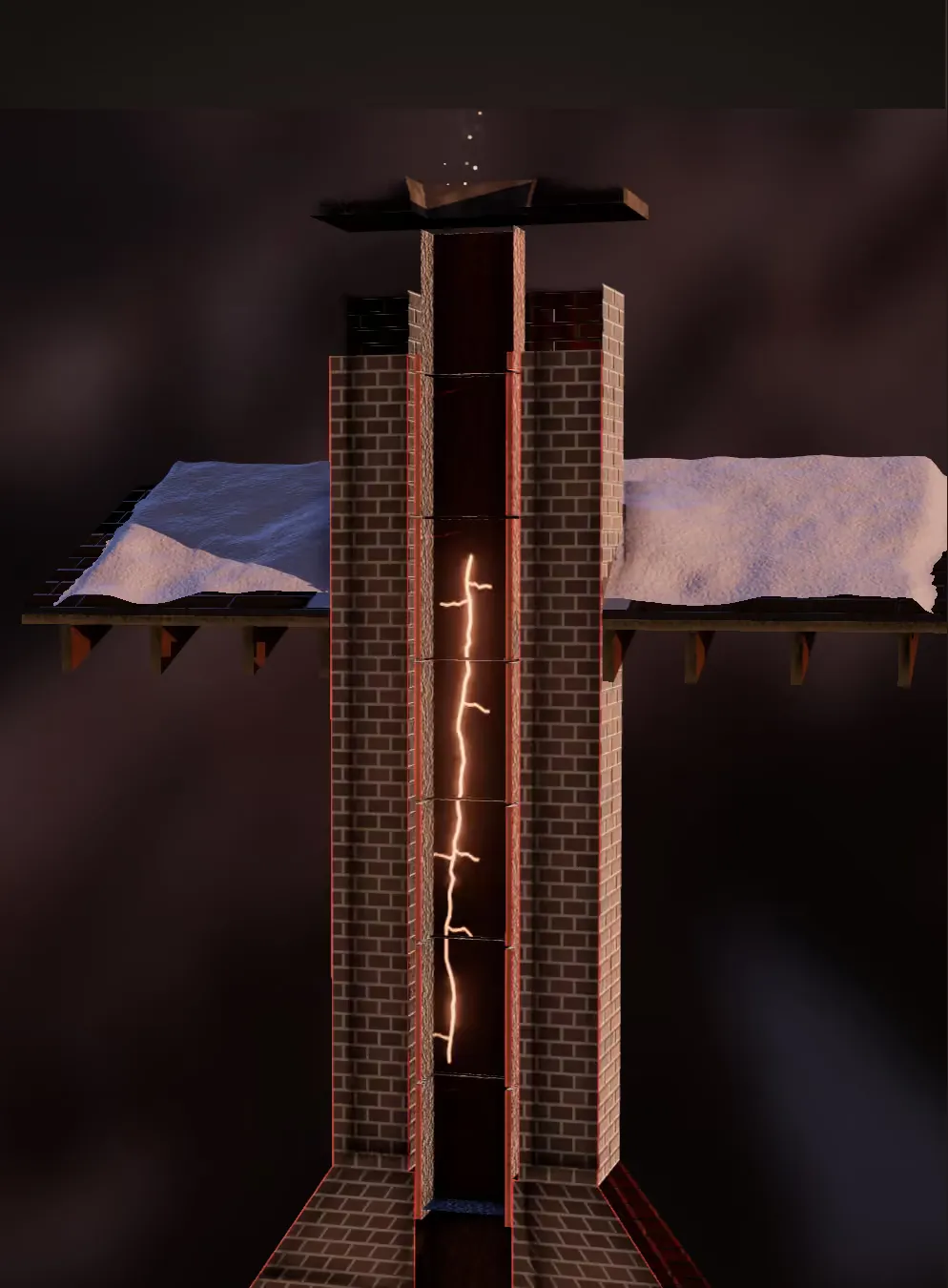
4Running up the middle
The liner carries smoke, heat and combustion gases up and out. A cracked or shifted tile can let heat reach the framing and fumes reach the rooms.
We check: cracked or shifted tiles, gaps in the mortar, the right size for the appliance.
Next: Smoke chamber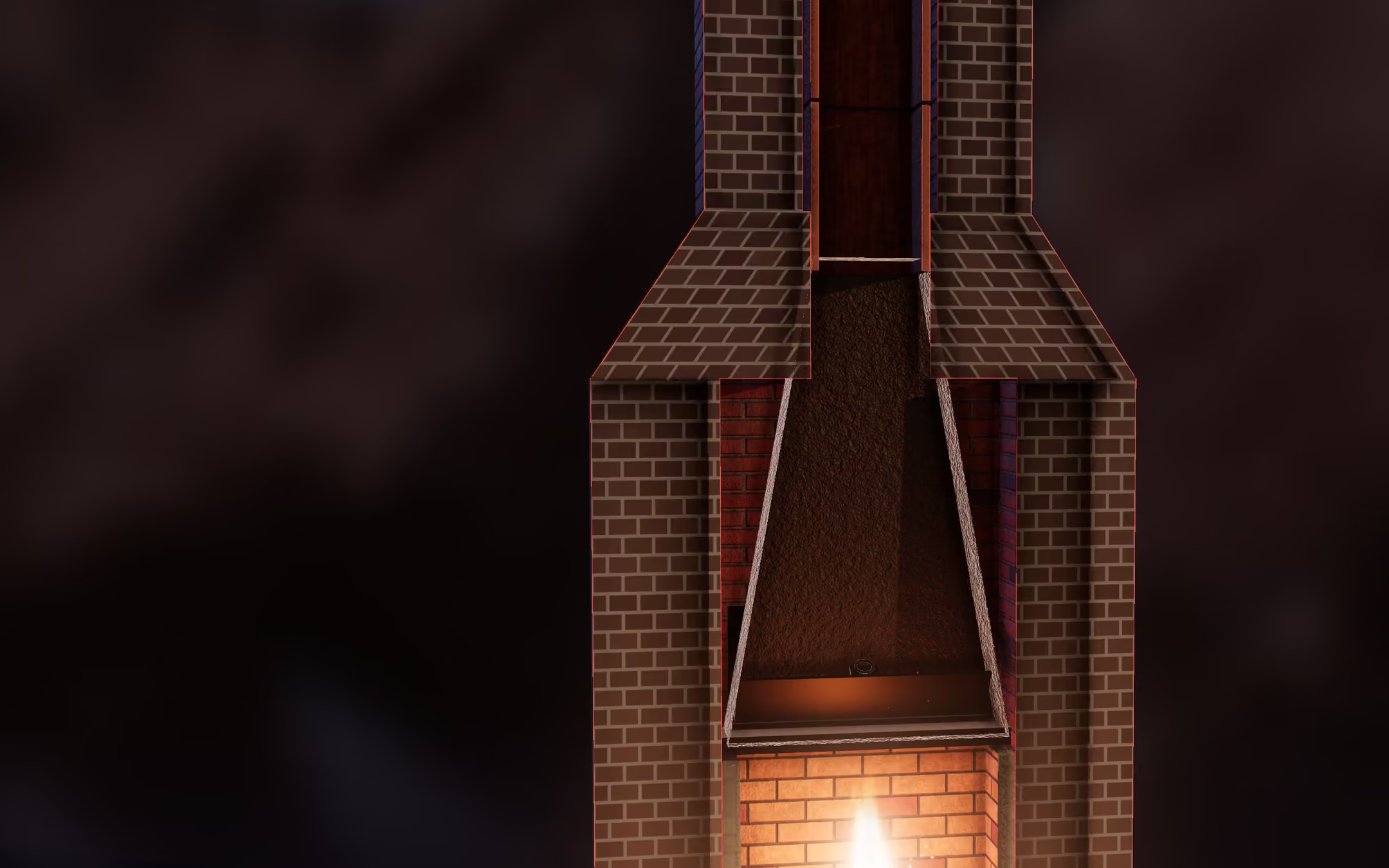
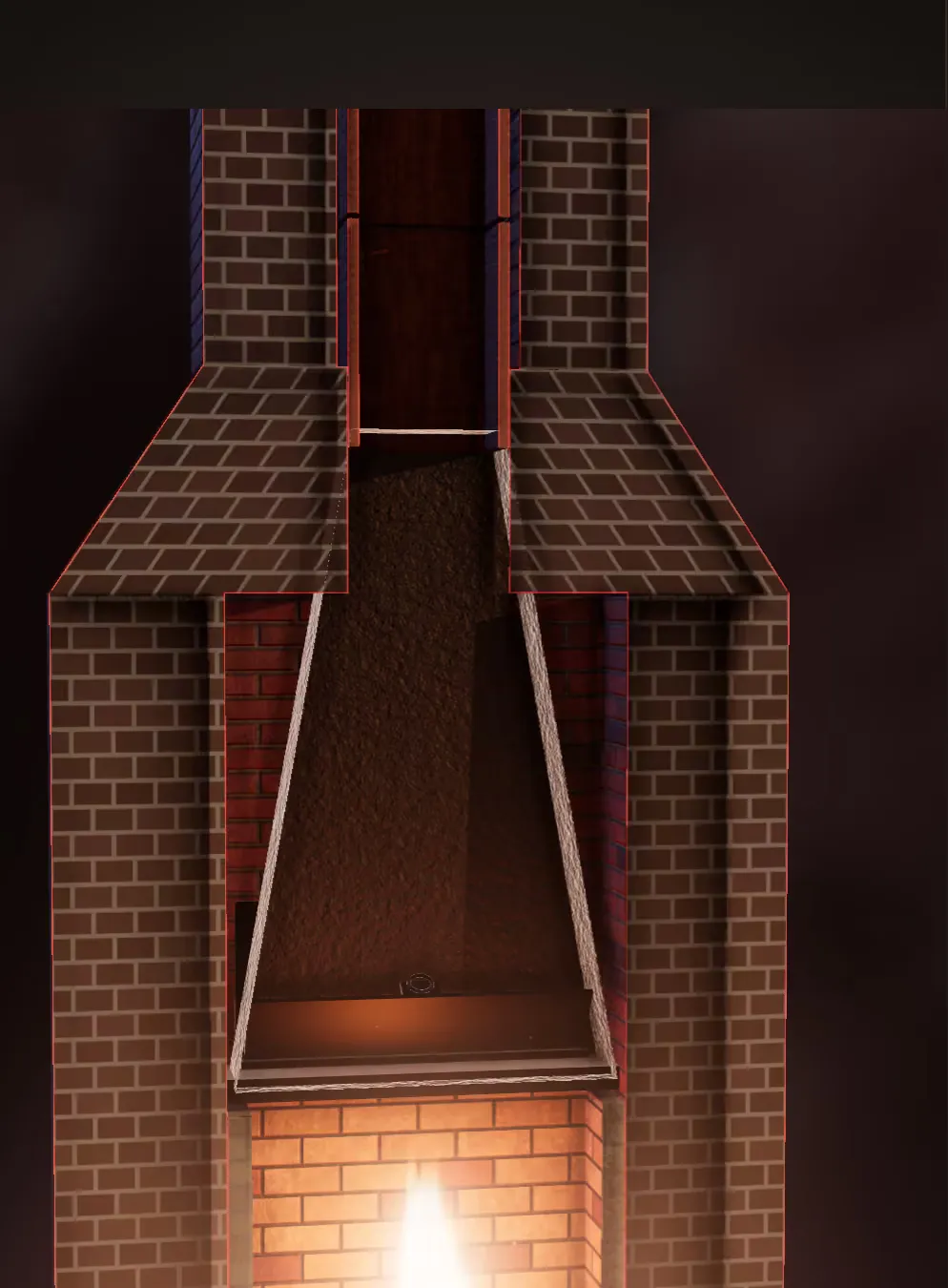
5Over the fireplace
Creosote settles here first. The Chimney Safety Institute of America advises sweeping once the deposit reaches 1/8 inch.
We check: glazed creosote, a damper that closes tight, open masonry walls.
Next: Firebox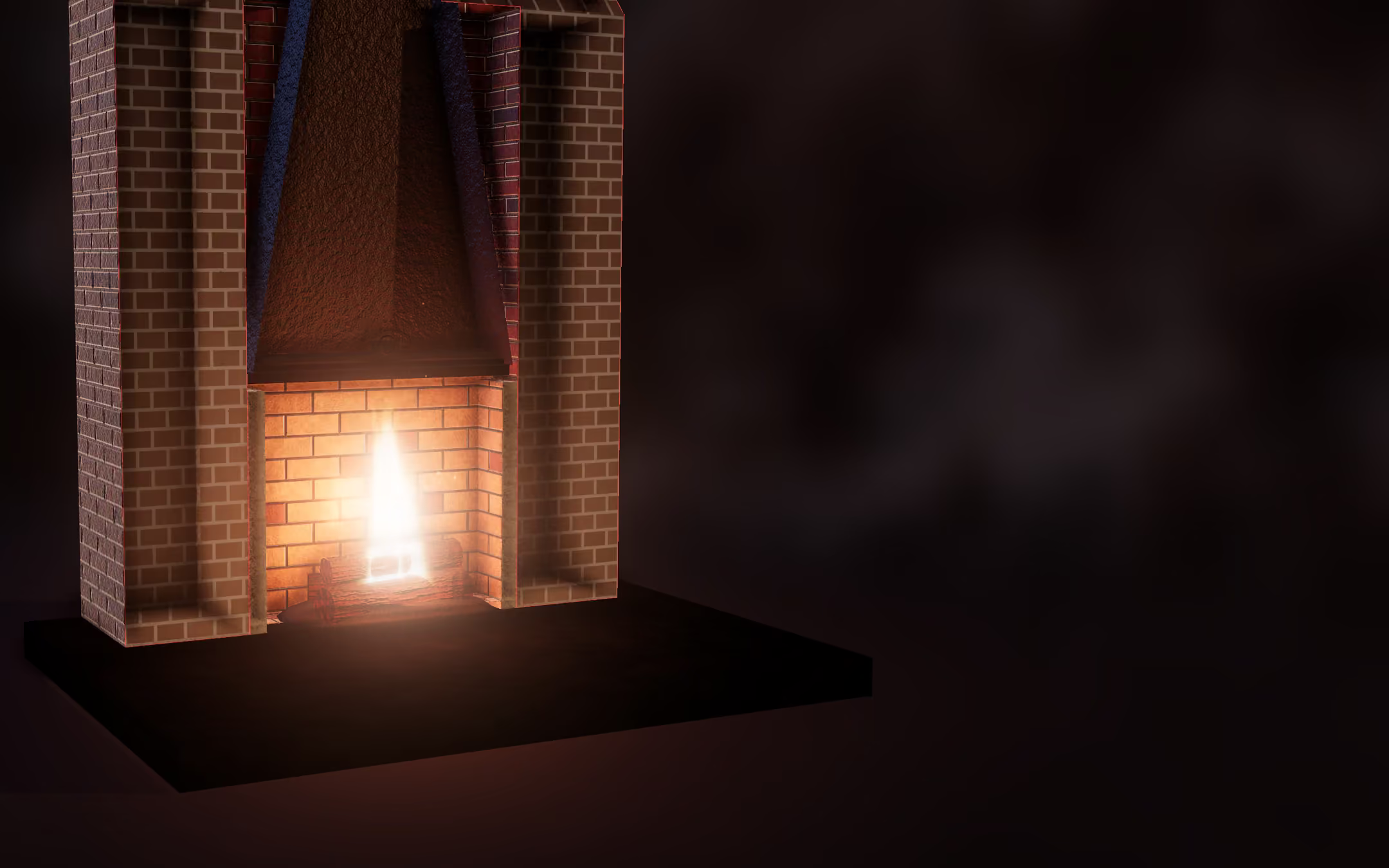
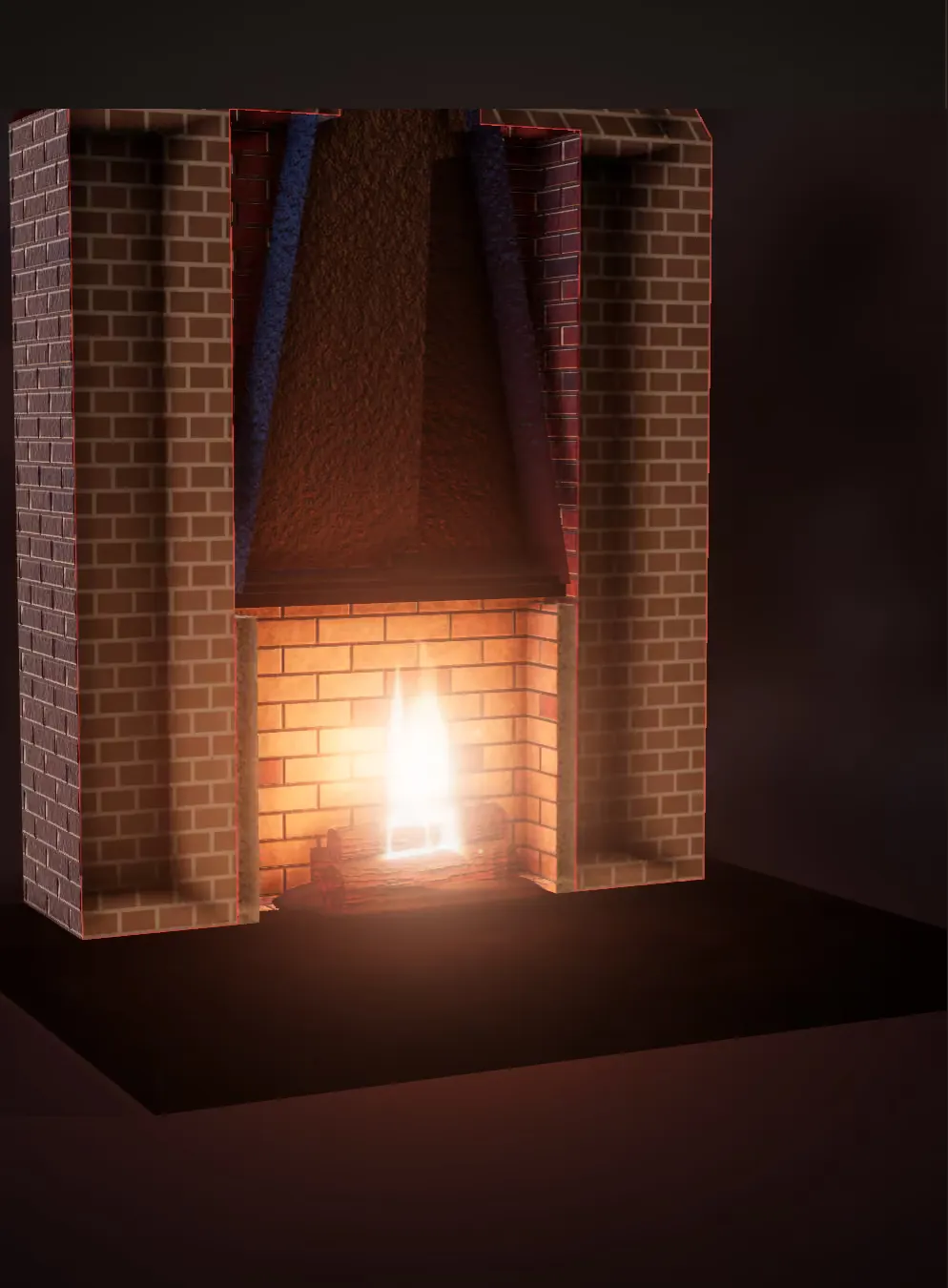
6Where the fire burns
Firebrick and refractory mortar take the heat of the fire. A few open joints are a small job now and a large one once the damage reaches the masonry behind.
We check: joints that have opened, cracked firebrick, a sound hearth.
See all six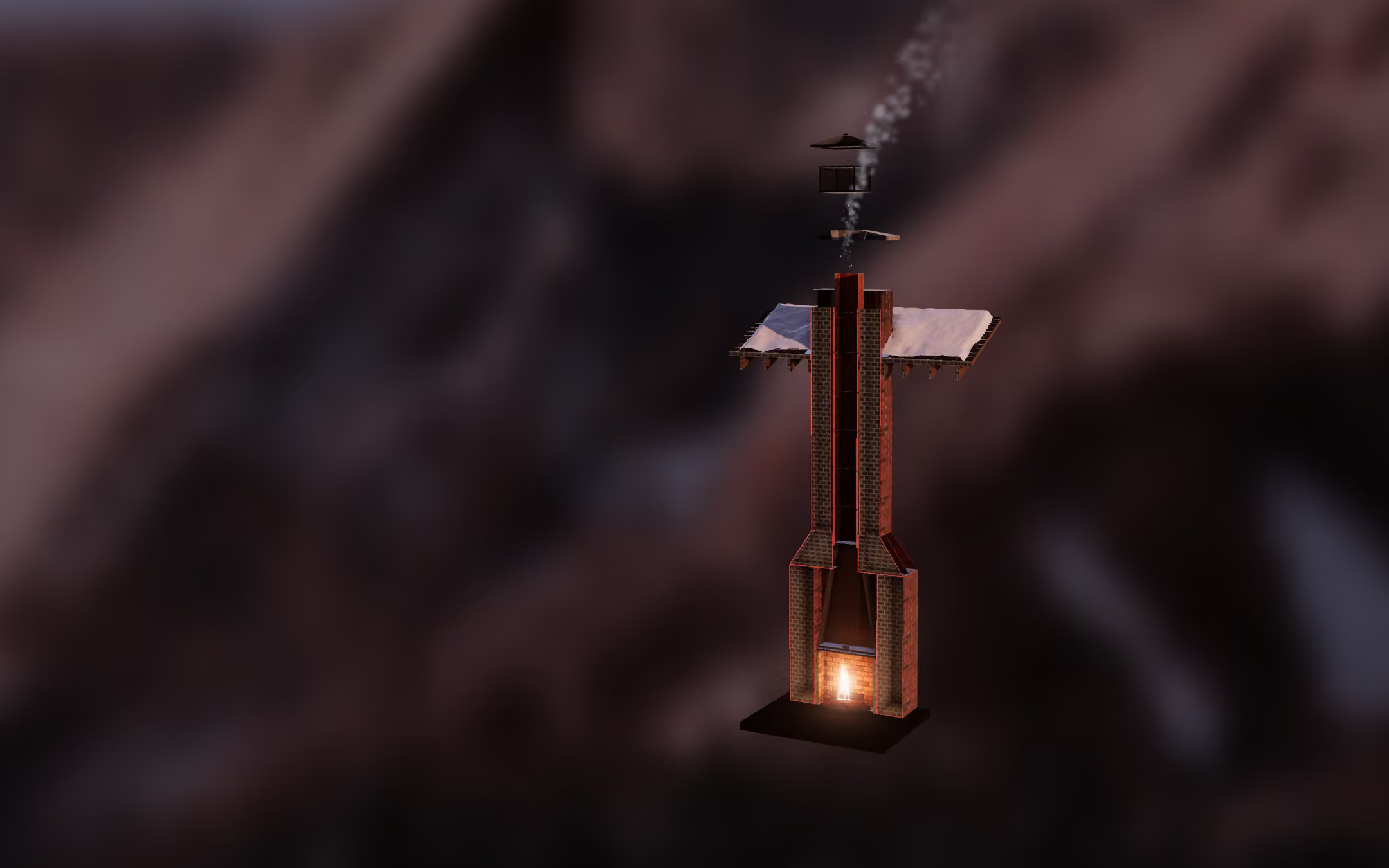
An inspection starts at the cap and works down to the firebox, one part at a time.
(303) 590-3768Or book onlineA sweep clears the creosote and soot that build up in the flue, above the damper and in the firebox. With a clean flue the fire draws better, and a stray spark finds nothing to ignite.
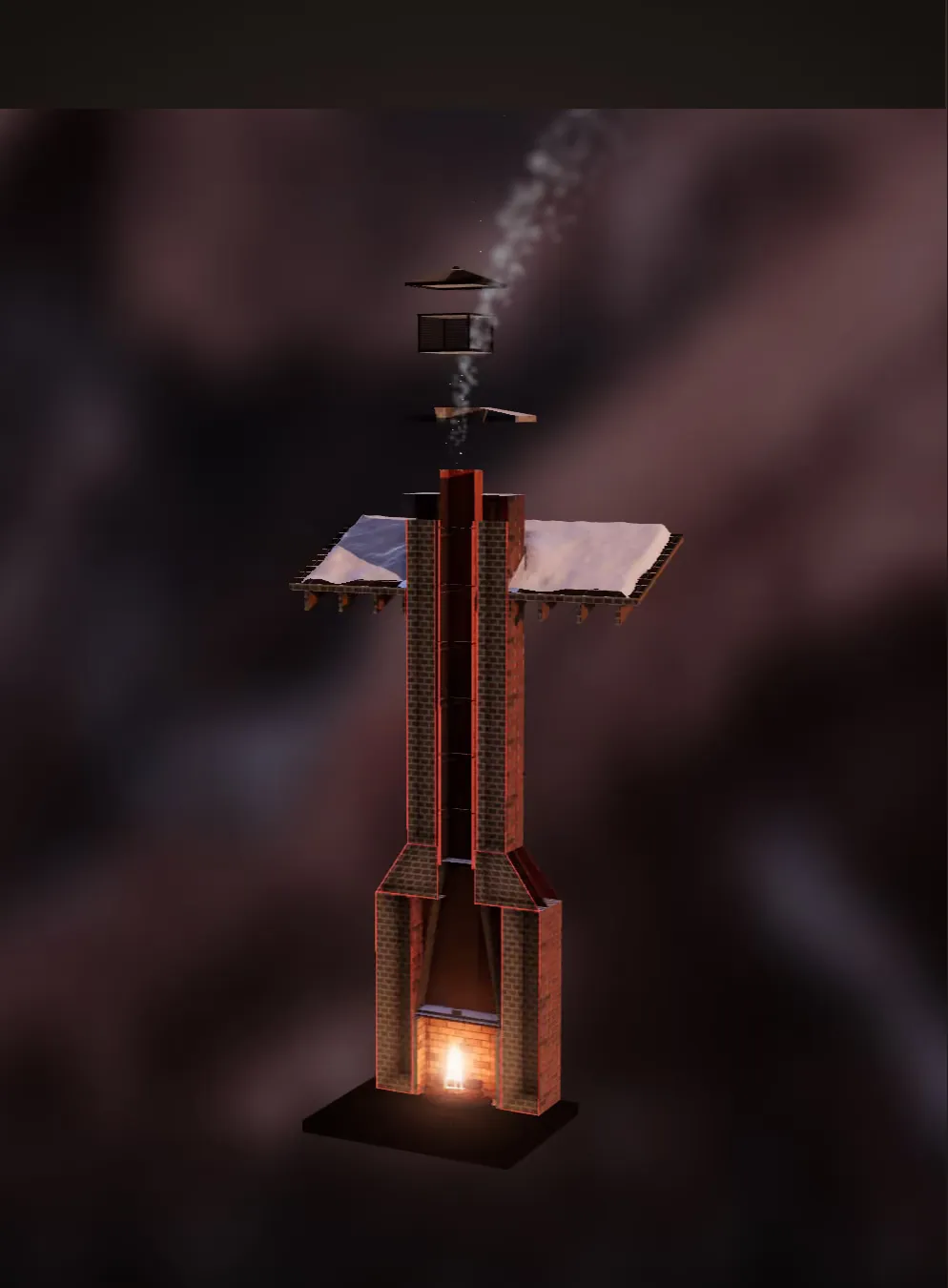
We go over the whole system from the cap down to the firebox. It is worth doing every year, after a chimney fire and whenever a house changes hands: NFPA 211 asks for a Level 2 inspection at a sale.
Work on crowns, caps, flashing, masonry joints and firebrick. A small repair made early keeps water and heat where they belong, before another freeze widens the damage.
Firebox, smoke shelf and wood stove cleaned and looked over, so the first fire of autumn burns in a clean firebox and the damper moves freely.
Three forces that work on chimneys along the Front Range, and why a small repair now beats a large one later.
01 / 03
Water swells by about 9% as it freezes. Lafayette sits about a mile above sea level, and when winter nights drop below freezing, every hard frost pries a cracked crown or an open mortar joint a little wider.
Source: Physics of ice; Wikipedia (elevation 5,266 ft)
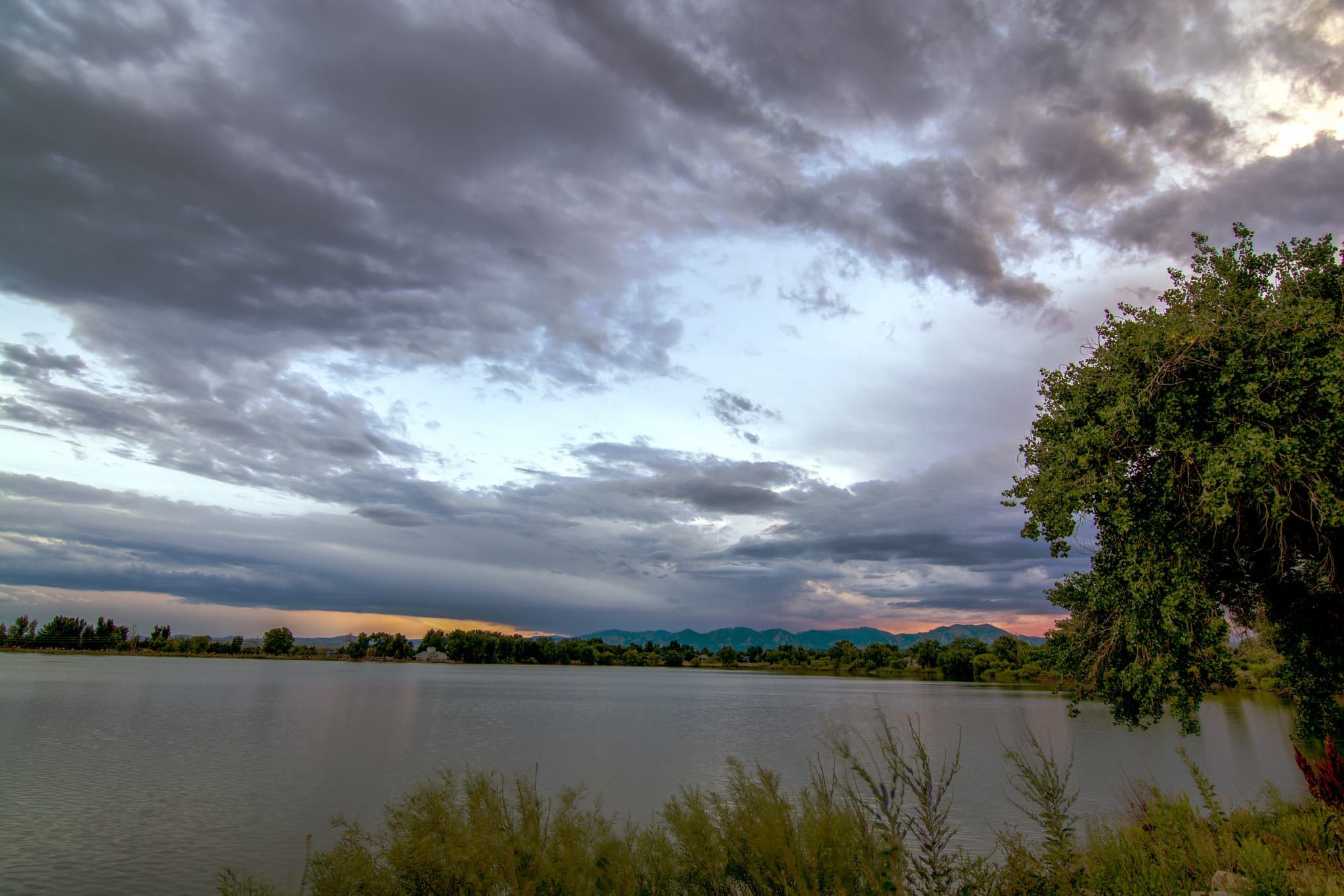
Photo: Jared Winkler, CC BY-SA 4.0
Photo: Jared Winkler, CC BY-SA 4.0
02 / 03
The gust recorded in Louisville, next door to Lafayette, on the afternoon of December 30, 2021, a day when gusts along the foothills ran from 70 to 100 mph. Wind like that works caps loose, lifts flashing and drives snow into open seams.
Source: NWS Boulder, December 30, 2021
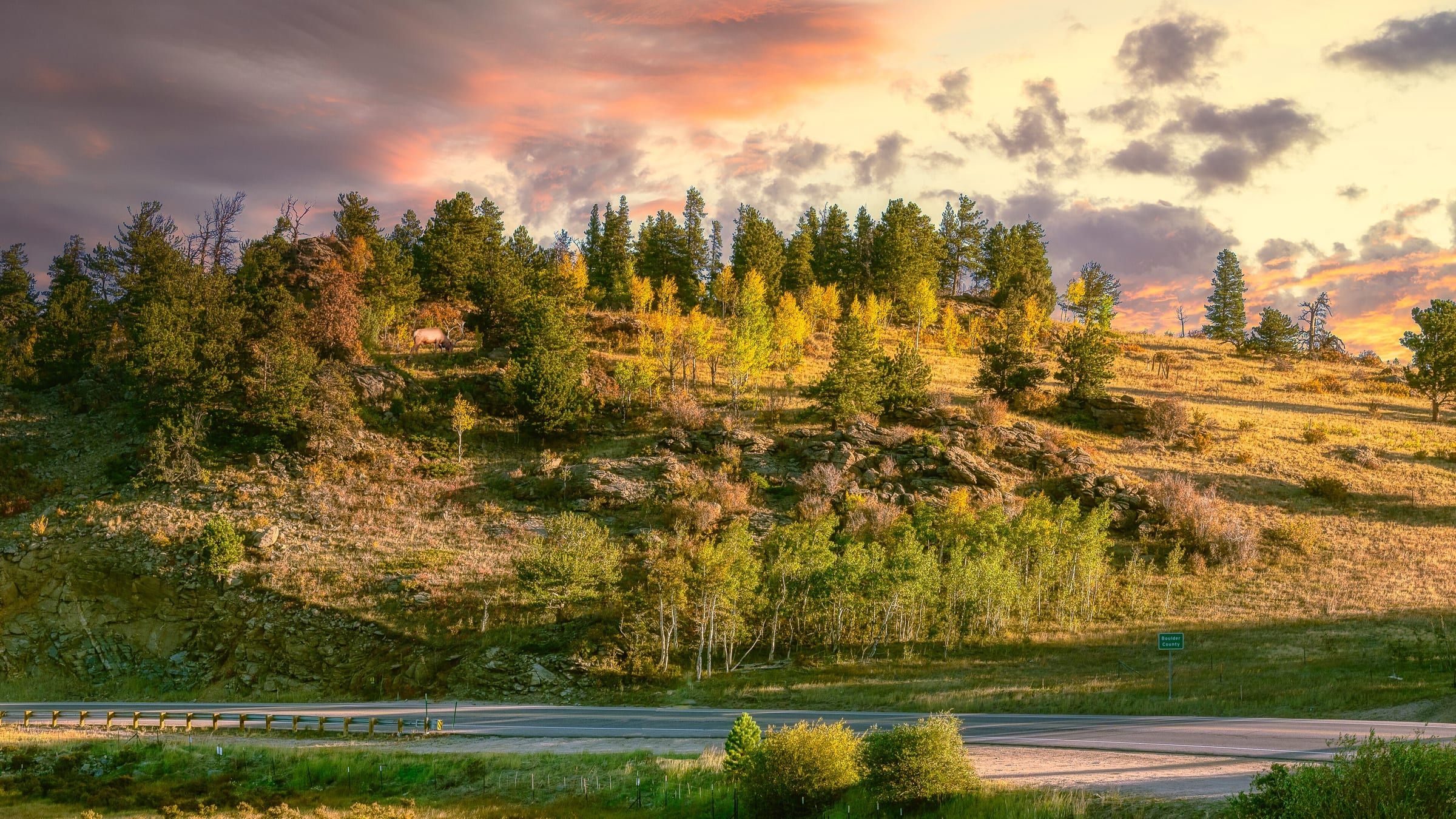
Photo: Makia Minich, CC BY-SA 3.0
Photo: Makia Minich, CC BY-SA 3.0
03 / 03
Homes destroyed in nearby Louisville and Superior by the Marshall Fire of December 30, 2021. The screen on a chimney cap, with openings no wider than 1/2 inch under the model building code, keeps embers inside the flue.
Source: NWS Boulder; IRC R1003.9.2
Photo: G. Lamar, CC BY 2.0
Photo: G. Lamar, CC BY 2.0
The rating and the review count come straight from our Google Business Profile.
Our Google Business Profile lists Lafayette as its service area, and that means the whole city, from in the west, past and , to the miners' cottages of , with the Front Range along the western skyline.
Not sure you are in the area? Call (303) 590-3768 and we will tell you.
Terrain data: AWS Terrain Tiles. City boundary: US Census Bureau TIGERweb. Places and coordinates: OpenStreetMap contributors.
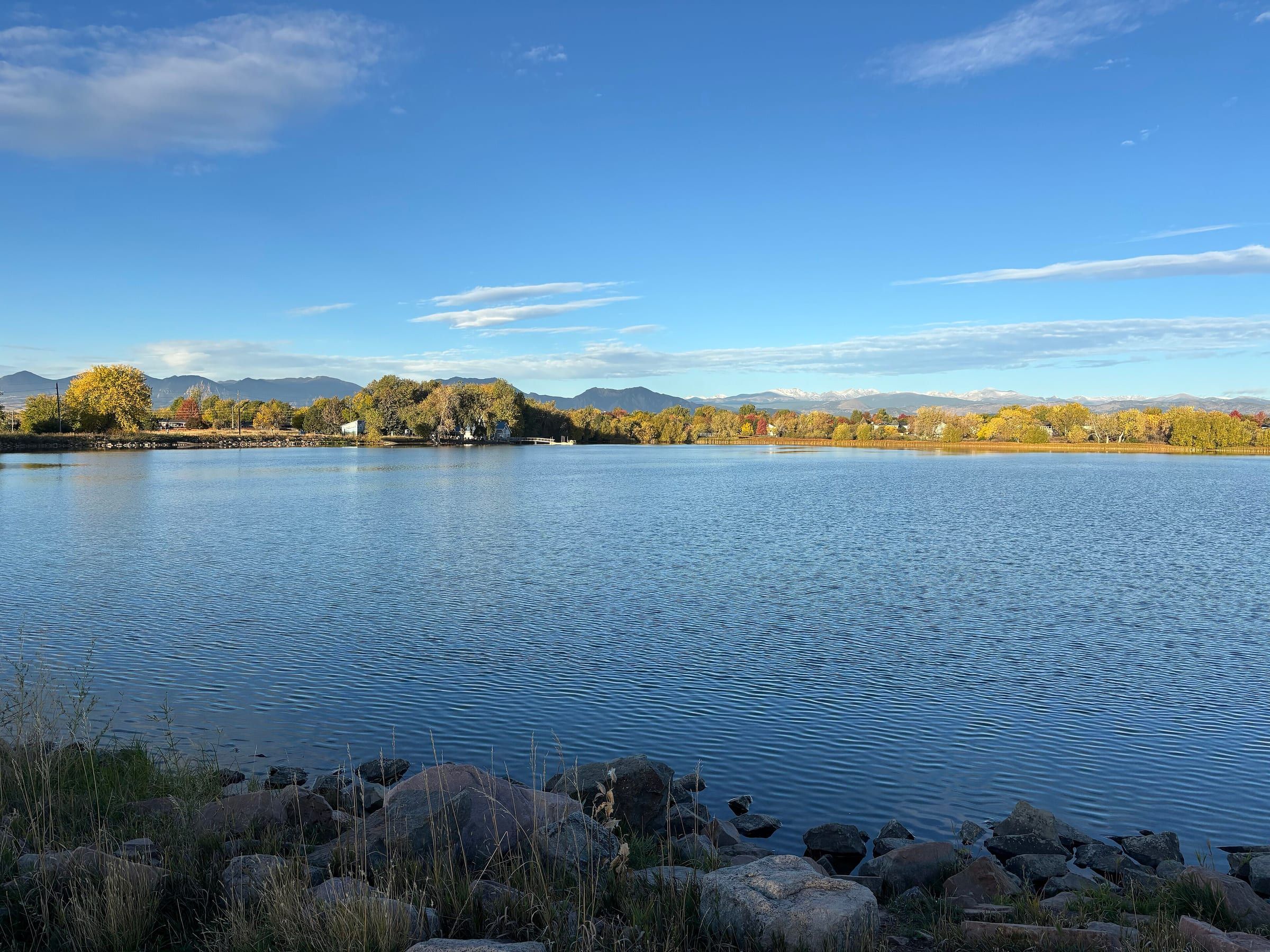
Photo: Mikepascoe, CC0
Plain answers, and the source where there is one.
Sweeping follows how much wood you burn rather than the calendar. The Chimney Safety Institute of America advises it once a deposit reaches 1/8 inch (sooner if the creosote looks glazed), and the National Fire Protection Association recommends a yearly inspection, which is when the buildup is measured.
Source: CSIA, NFPA 211
Under NFPA 211, selling or transferring a property is one of the triggers for a Level 2 inspection. Beyond what a yearly look covers, it adds the attic and crawl space and a video scan of the flue. Old Town's miners' cottages date from roughly 1895 to 1930, so what stands behind the walls can differ a lot from one Lafayette house to the next.
Source: NFPA 211; Lafayette History
Creosote left in the flue gives off a smoky odor when the air turns warm and humid, and air drifting down the chimney can carry it into the room. A sweep takes away the cause, and a tight damper plus a cap keep any leftover odor out of the room.
Source: CSIA guidance
The crown is the concrete slab that caps the masonry and sheds water. Water in a hairline crack swells by about 9% as it freezes, so with freezing nights through the winter a small crack widens a little each time.
Source: Physics of ice
A cap blocks rain, snow, birds and squirrels from entering the flue, and its screen doubles as a spark arrestor. The model International Residential Code (R1003.9.2, 2021 edition) allows screen openings from 3/8 up to 1/2 inch, so embers cannot pass yet the mesh does not clog. The code a city adopts can differ.
Source: IRC 2021, R1003.9.2
The whole city of Lafayette, the service area on our Google Business Profile, Indian Peaks and Silver Creek included. Not sure whether you are inside it? Call (303) 590-3768 and ask.
Call (303) 590-3768 (Mon to Fri 7 AM to 7 PM, Sat 8 AM to 5 PM), or send the form on this page at any time, and we will ring you back to set a time.
Send the form with what you need and we ring you to settle a time.
Online
Any hour, through this form
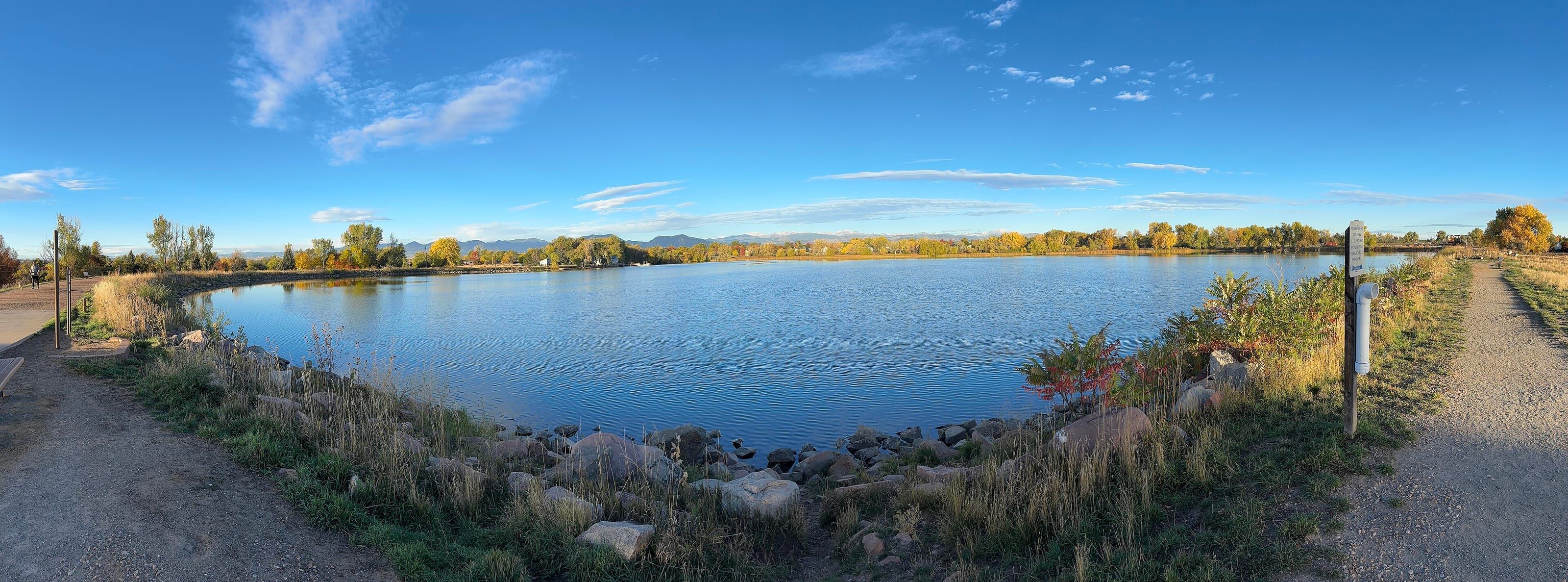
Photo: Waneka Lake east shore panorama with Front Range, Mikepascoe, CC0
Office Mon to Fri 7 AM to 7 PM, Sat 8 AM to 5 PM. Book online any hour.Office open now, until Office opens . Book online now.
Book online